Wide Open preview 3

Green Harmony

Green Harmony. Oil on panel. 18 x 34.” 

This painting grew from a sketch, a study and a rendered drawing.  I felt like a gardener before spring, transplanting little seedlings from pot to pot as I drew, measured, enlarged, and painted.  Each time, I trusted the image to materials I made myself.

It is satisfying to brew one’s own ink, cut panels, dissolve rabbit-skin glue and dust for gesso.  Taking handmade materials outdoors makes one look more acutely.  One of my teachers, Nathan Bertling, used to tell me, “If you love your paper, you’ll love your drawing.”  He meant that time spent in preparation makes for good execution.

Much is made these days of “plein air” painting, and often I’m asked, “Did you do that all plein air?”  To which I say “Harumph.  I was working before I went outside.”


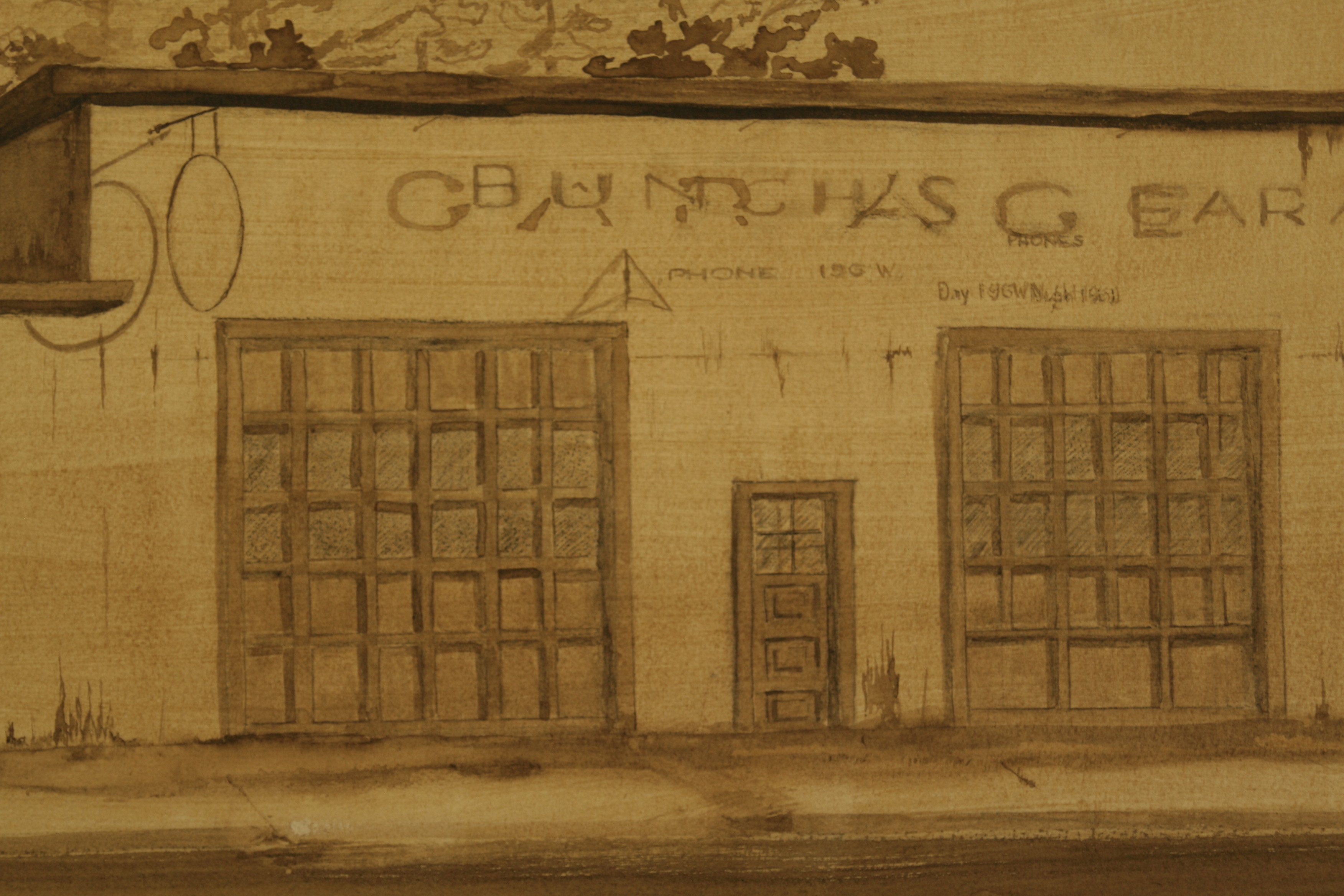
Bunch's Garage

Bunch’s Garage. China ink. 3 x 6″


Study of Bunch's Garage

Bunch’s Garage, study. Walnut ink.  10 x 14″


large ink drawing

Bunch’s Garage, Large: detail


Bunch's Garage

Bunch’s Garage. Walnut ink. 24 x 36″


Wide Open preview 2: large drawing

Below is the 24 x 36″ large study I did for Harmony in Green, an early 20th-century auto garage in Edenton.  It will hang my solo show there on Dec 4.

In the Renaissance, most preparatory drawings for paintings were done in chalk.  This is a great way to indicate quickly where things go in the composition  Such drawings look like this one, which took about twenty minutes to do.  Chalk is smudgy for shadows and holds an edge for sharp lines; hence, one can capture a lot of information with it.

Figure study

Seated Figure. Sanguine chalk.

But to test out large blocks of light and shadow, one turns to ink.  Since we live  a century into the era of comics and posters, it’s nothing for us to look at a poster and register an image.  Most poster- or comic-style drawing, though, is a very efficient shorthand, which purposely omits reference to the third dimension.  If you were busy perceiving depth in a billboard, you couldn’t read that billboard while driving.  In short, what we spend in depth perception, we gain in information.  Non-realistic pictures are worth a thousand words, as marketers the world over agree.

Realism, though, is priceless.  Witness this gem from Luca Cambiaso (fl. 1550’s):

figure studies

Luca Cambiso. Figure studies. Ink

Yes, this is realism, albeit at its most stripped-down. No one doesn’t like these Renaissance robots.  Just the act of breaking these abstract figures up into front (lit) planes and side (shadow) planes gives them life.  This is simplicity: a little doing a lot can make for a monumental effect. If you remember Genesis 1–or any other creation myth, for that matter–you have already noticed that life will not go where there is no form.

So here’s the same treatment applied to a 24 x 36″ study of the building I’ve been working on.  A little doing a lot over two square yards.  The ink is walnut ink made from the bounty of North Carolina, and the pens used in the drawing are reed pens, just as Cambiaso used.

Bunch's Garage

Bunch’s Garage: large study. Walnut ink. 24 x 36″


Wide Open update and preview

First, I corrected the date given for my show in Edenton next month.  It is now to open on Thursday December 4th.  The time remains 5:30pm. The volunteers who run the Chowan Arts Council Gallery didn’t want the show to conflict with the lighting of the town Christmas tree.

Second–and as promised–another look at Bunch’s garage, which greets entrants into the town.  Last year I made the quick sketch of it in China ink, paying attention almost entirely to the shadows cast by the molding.  The building sports a certain posture despite its age, so I returned to the spot, this time to study the texture of the corrugated sheet-metal siding:

Study of Bunh's Garage

Bunch’s Garage, study. Walnut ink.

The rhythm of verticals in the building’s fabric makes a strong contrast to the contorted oak forms behind.  I chose a prepared paper to catch the sense of atmosphere that nourishes the trees and ages the building, because, for the time being, the structure’s age contributes to its dignity.  I also abandoned the brush, intending to suggest brittleness with the use of goose and steel pens.

Making a drawing out of a million tiny lines demands an upped tempo and a light touch at once.  It asks both draftsman and viewer to see with two faculties that our historical moment hates: aggression and restraint.

Wide open: the show

On Thursday, December 4, I’ll show 30-some works in oil and ink at the Chowan Arts Council at 504 S. Broad St. in Edenton.  The show is titled Wide Open and features the overlooked landscapes of North Carolina’s Northeast.  This is a land of forgotten explorers, a four-and-half-century history of visual art, small Indian tribes, and big skies.  Between now and then, I’ll offer previews of some of the works and reflections on the places that inspired them.

The little sketch below grew into a study, a 2 x 3′ rendered drawing, and a painting almost as big.

Bunch's Garage

Bunch’s Garage. China ink. 3 x 6″

Of Time and the River, redux

The hardworking folks at Riverlink hope to do another show next year, and I’m grateful.

A motivated crowd is a good thing for artists and art lovers alike, but not for the reasons you’re thinking.

Here’s how:  because people came willing to pitch in for a charity they believe in, they showed up generous.  That’s a good attitude to have when looking at art.

People respond to beauty in much the same way as they respond to goodness.  They might be hungry–even starving–for it, but they can’t just sit passively and soak it in.  Both ideal things require one to go out of oneself, to take a moral or sensory leap as the case may be.

I’m grateful for two more reasons.  First, the folks at Riverlink have been leading the cleanup efforts along the river where I learned to draw the landscape.  The first landscape I ever sold was a view of Ledges Park.  Second, I got an education in North Carolina history and culture from those who attended.  Turn up next year, and enjoy the party as well as the show.

Mill Shoals Falls

Mill Shoals on the French Broad River

Of Time and the River

That’s the eponymous title of the benefit art show for Riverlink, the non-profit that has cleaned up and made accessible the French Broad River near Asheville.  The French Broad is the third oldest river in the world, it flows north, and its beauty has been neatly reduced to little rectangles and hung on walls.

The French Broad River, Hamblen County, Tennessee.

The French Broad River, Hamblen County, Tennessee.

A ticketed event opens the show on October 23rd at Sol’s Retreat, overlooking said river above the New Belgium site. Free public viewing, albeit without live music and bottomless gluttony are available the following two days, 11am-6pm.

Bowen Bridge

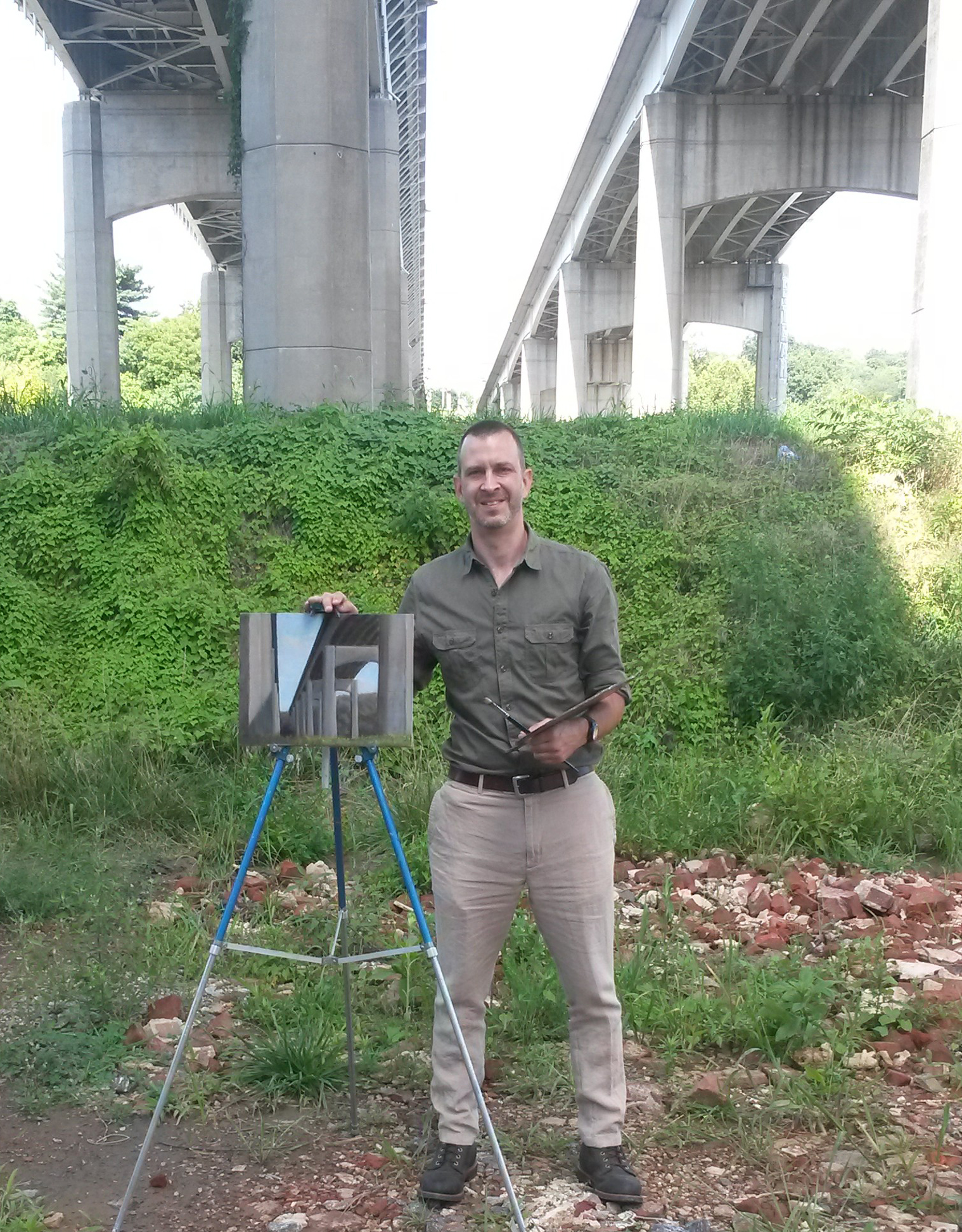
The show takes place just uphill from where I’m standing. This is in the flood plain of the French Broad under the Bowen Bridge in West Asheville. Downtown is over my shoulder.

You can sample works by some of the exhibitors here.  Many are my teachers, and I’m pleased to show my work next to theirs.

Small bites, September 25, 5-7 pm

The Windsor Boutique Hotel at 36 Broadway in downtown Asheville is presenting me along with two other painters in its next “Art at the Windsor” series.  In addition to art in the lobby, there are three floors of realist paintings as well as a few abstracts.

Kudos to the Windsor for assembling a group of a dozen or so realist painters.  Precious few galleries show such a belief in art that depicts actual things.

Check out the hotel’s teaser here:  http://www.windsorasheville.com/blog/

Long gone

Long Gone. 18 x 24″

The painting above will be there, as well as some that are not featured on this site; for lovers of fine drawings, a large-format crispy autumn scene with ten botanically accurate tree species and a three-hundred yard depth of field, executed in walnut ink without brushes on a frosty November morning.  Yum.

Oh, and the chocolates at these functions are swell, too.

Of Time and the River

Thus the allusive title of a late October group show for the  benefit of Riverlink, the Asheville non-profit that does so much for the health of the French Broad River.  It will be hosted by Alchemy Fine Art at Walnut and Rankin Streets in downtown Asheville, North Carolina.

The French Broad is narrow, winding and unnavigable for most of its length, and therein lies its charm.  Unlike its better-known and larger brethren such as the Delaware, James and Mississippi, it unites geography but divides people.  You can follow the James along US 60 in Virginia from Hampton Roads to Scottsville in the Blue Ridge Mountains, and the people all along your route speak with the same Tidewater accent.  Centuries of reliable transport has united them.

Try the same thing from the mouth of the French Broad at Knoxville, Tennessee to its source near Rosman, North Carolina, and you’ll have a widely different experience.  You’ll be in the car all day.  You’ll drive on Federal, State and County roads, many of them dirt and gravel.  The sweetness of East Tennessee speech gives way to the sour note of Western North Carolina.  The churches go from Baptist to Pentecostal to Baptist again. And seeing the river will involve walking.

For two hundred and more years, anyone travelling any distance was concerned to get across the French Broad rather than up and down it. It was hard. That goes double for those with baggage, horses or automobiles–or, in my case, an easel, paints and lunch.

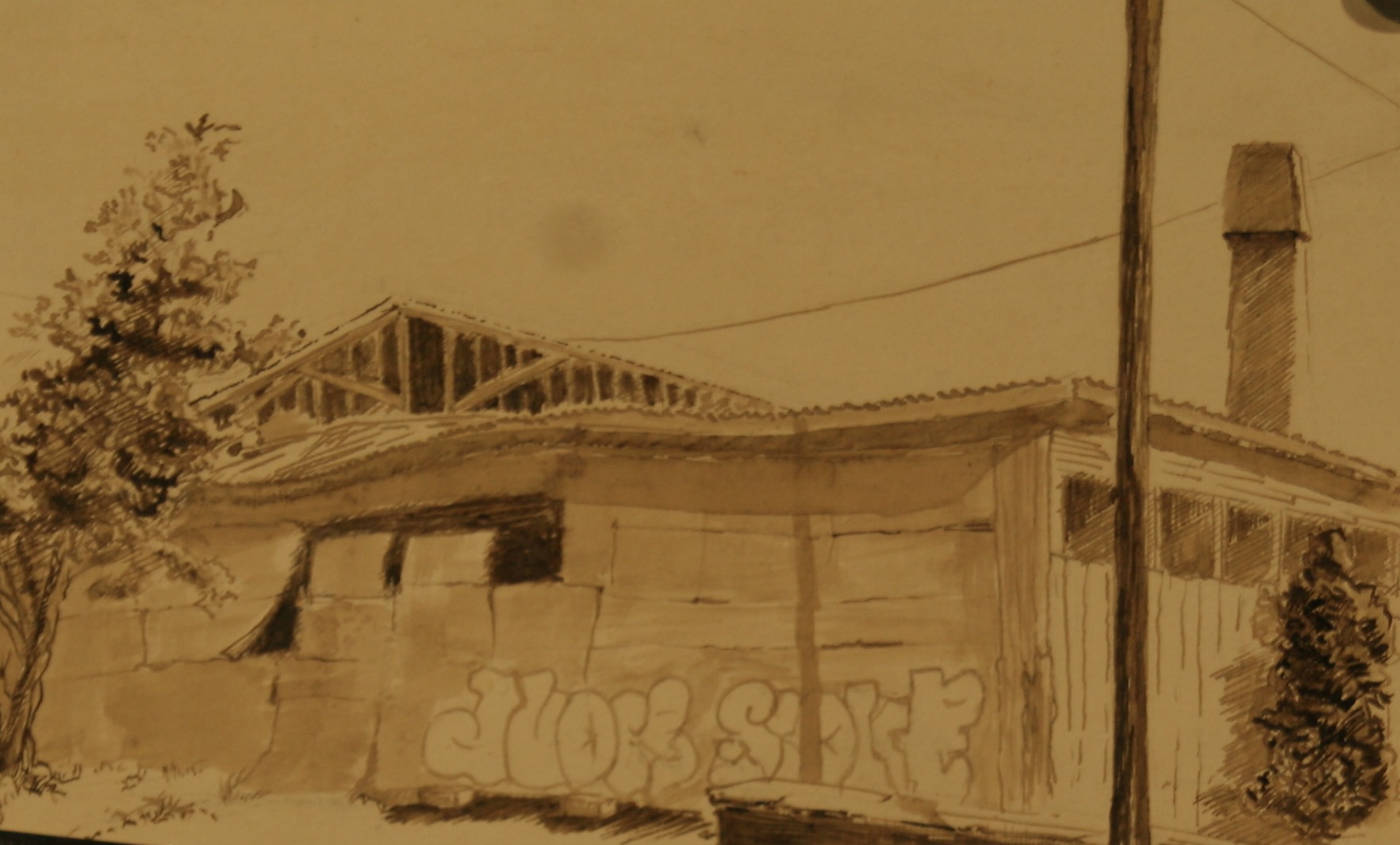
The bridge in the oil painting below is a triumph all the more impressive when one recalls that people actually died crossing this river in private ferries as late at the 1940’s. Underneath it settles the graffiti-covered tobacco warehouse in the ink drawing, itself a little monument to works and days now gone, as vice gives way to vice between watery death and sunny achievement.
Bowen Bridge

The Bowen Bridge, carrying I-240 across the hundred-foot wide French Broad River into downtown Asheville–and the large gorge it cuts. I’m in the space dugout to catch floodwater, and the river is behind me over the berm.

Many of the better views of the river are lost to public memory or overlooked.  And that’s a shame.  Degas famously said, “Art isn’t what one sees; it’s what one makes others see.”  Art can make you remember, too; or question a hole in your memory.  The next few posts will feature some of these overlooked places, which are no less beautiful for that.

Visit Riverlink’s website here.  They haven’t forgotten the river.

River District Warehouse, Asheville.  Walnut ink
River District Warehouse, Asheville. Walnut ink


Forgetting and seeing again

Mouth of the Meherrin River

Mouth of the Meherrin River

Eighty miles west of the Atlantic, twenty miles south of Virginia, and two hundred years past memory, the small Meherrin River joins the Chowan, holder of pirate treasure and backdrop to a few colonial plantations.

No one has heard about this river, because its namesake, the Meherrin Tribe, registered its holdings in the appropriate court house in the 1750s.  Individual Meherrins still hold title to ancestral land nearby.  With deeds to their land, the Meherrin didn’t have to fight a losing war for their land as did the Tuscarora, whose name graces a beach a few miles downriver.

My teenaged grandfather used to canoe down this river during the Great Depression.  He and his friends made their canoes out of castoffs from a veneer factory near Murfreesboro.  “They just said, ‘y’all take all that stuff; we don’t want to burn it.'”The only interruption on his trip was the cable that spanned the River at Parker’s Ferry, twenty feet to the right of this view.

They caught fish and cooked them on the banks where they slept.  When they had to return to family, chores, church and school, they offered fish to trucks that took the ferry, and the drivers would drop them, canoes and all, near home.

I don’t know how he stood the deer flies.  I varnished myself with bug repellent and sustained eighteen bites.  And that while wearing canvas pants, coat and hat to paint this picture.  Even then part of me was underwater on the ferry ramp so that I could get a view.

You can find a good picture of the ferry in operation here: http://www.newsobserver.com/2014/06/08/3919675/best-kept-secrets-100-counties.html.  Select the picture at bottom right if you follow this link.

Some pictures come from stories.  Some occur when the story is over and our work is done and there is peace at the last.


Art takes wing

Through August, patrons may view and purchase my art at the Asheville Regional Airport.  Now is your chance to take home a piece of North Carolina.

Patrons may purchase art by emailing art@flyavl.com or visiting the Airport’s art page:

http://flyavl.com/pages/passenger-services/in-the-terminal/art-music.php


The Trading Post, Edneyville.  8 x 13.5"

The Trading Post, Edneyville. 8 x 13.5″

Tomato 'Costoluto'

Tomato ‘Costoluto.’ 6 x 6″

Sharecropper's House

Sharecropper’s House . 8 x 9″