Easels in the Gardens, April 15-16

It’s time for Easels in the Gardens, the biennial benefit for the Cupola House Association of Edenton, NC.

Both the town of Edenton and the event have enjoyed a stream of good press in the last decade, including Forbes Magazine, Smithsonian, Coastal Living and Our State, which aside from this mention, has run a paid ad for the event in the April 2016 issue. The July 2015 print issue offers a wealth of photos of Edenton, too.

The town really is as beautiful as the hype. Fortunately, the strong agricultural economy, which surrounds the town has damped down any centrifugal concrete that has been the ruin of so many beautiful American places.

The Cupola House, which was rescued from neglect almost a century ago, is a monument to craftsmanship, design, and people with enough good sense and love to value such things.

The Cupola House (left) in the middle of Edenton, and Martinique Plantation(right) about ten miles north of town in Chowan County.  Both were built in the 1750’s.  The town and environs abound in 18th- and 19th-century architecture.

The event itself offers access to artists, abundant food and a band that does justice to Charlie Parker and Stan Getz.

All during a beautiful April weekend


Out of due season

Behold the Great Dismal Swamp, a sodden near-wilderness between the James River of Virginia and the Albemarle Sound of North Carolina.

In the swamp are the origins of the Pasquotank River, which drains into the Albemarle Sound at Elizabeth City.  Along its upper reaches, there will appear wind farms, where the ground is too low and wet to till.

But upwards of these new-minted towers of virtue about to built on sand, the ospreys play, the snakes climb the trees, and even the insects keep silent at noon.

This painting is about a third of the way done.  Already it makes me feel warm during the short days of the year.

Copy of swamp01

We set some wild places aside and feel proud; we fail to wreck others, and fee humble.  Rightly so.

Vendange

Black walnut ink in Mason jars

Black walnut ink

I am now offering walnut ink for sale.  It has a rich warmth unmatched by other kinds of ink.

Grey Wolf

Grey Wolf.  Reed pen with walnut ink and wash.

I’m working on a full-service web outlet, which will be up and running by December 1st.

If you can’t wait, visit the Ink page on this site to reserve some.  I’ll ship it or you can pick it up.

How it’s done

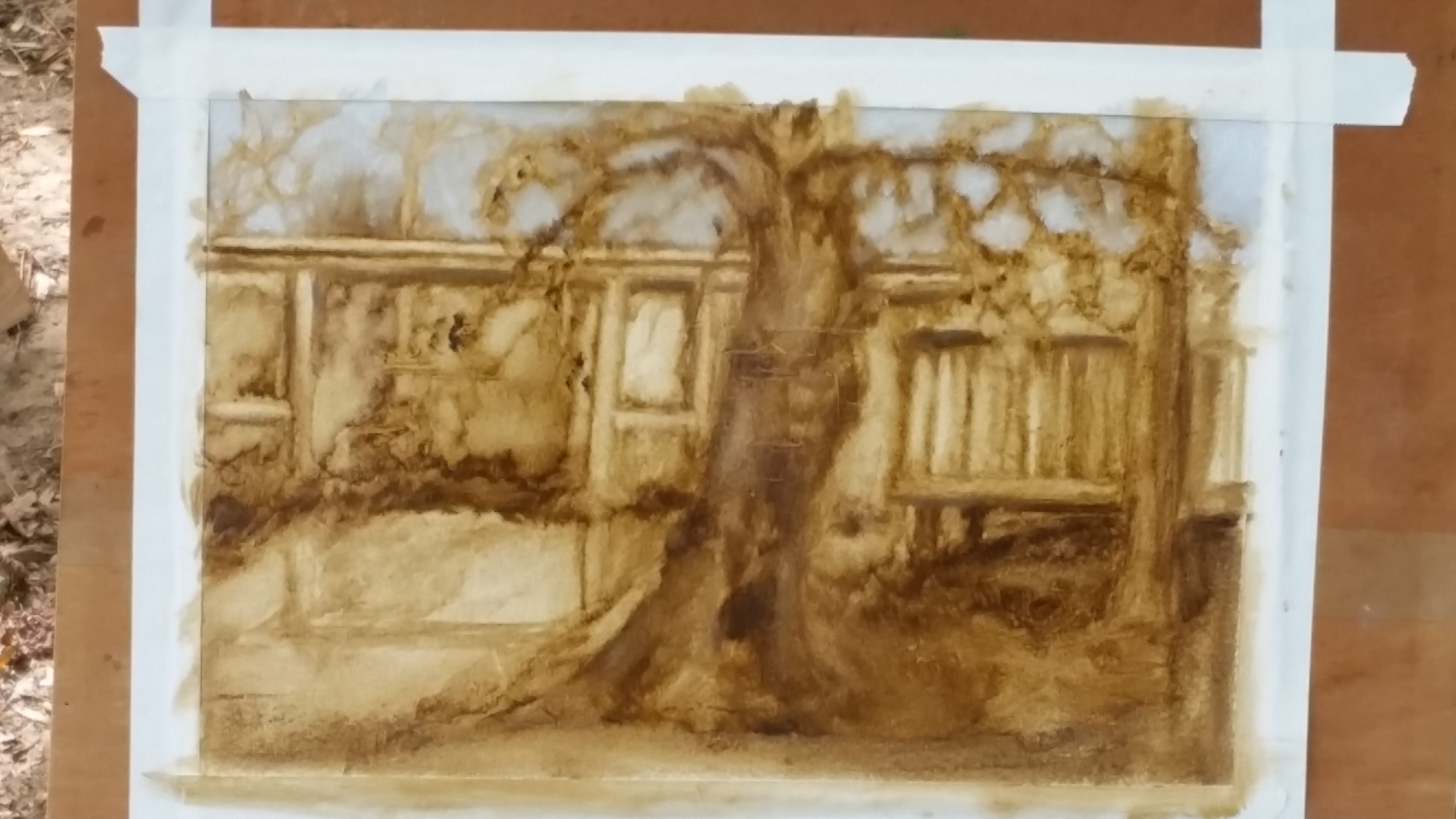
Enjoy an underpainting done by a student of mine on the left bank of the French Broad river in Asheville.

Painting with oils on paper is a long-standing practice which deserves to be better known.  It’s cheap, and since you prepare it yourself, you can make it in bulk and cut it to any required size.  It’s great for learning how paint feels at the other end of your brush.

Drawing a scene before painting it builds acquaintance with the scene and confidence in yourself.  And drawing it with a reed pen forces you to think about mark-making and to solve problems in general ways.  A reed pen is clunky at first, but that’s what it takes to keep you from getting lost in details.

handmade pens and inks

Reed pens and different inks

She kept the drawing nearby while she painted.  This has many advantages over working from photographs.  Rather than paint what a device records, you can paint what you see and check it by what you’ve learned.  And because she did an underpainting, she was free later, as she said, “to enjoy the light without worrying about where stuff is.”

Here it is the underpainting in raw umber with a bit of overpainted sky peeking through a thinning late September canopy.

Note the ink drawing against the tree in the foreground.

Notice how much work that raw umber layer is doing: values, placement, edges, modelling, and more.

Note the ink drawing leaning against the tree.

An ink drawing leaning against the tree.

Now it’s an annual event.

We’re doing it again.  A graphic invitation below; this week, some previews and teases.

logo resize
Of Time and the River
RSVP invitation

Plein Air artists interpret the French Broad River
RiverLink invites you to a private showing of this artistic inspiration and exclusive sale of the works.
On October 15th from 6 to 9pm at Sol’s Reprieve
Sol’s Reprieve is located at 11 Richland Street at the corner of Craven St and Waynesville Ave, across from the New Belgium Brewery (map).
Ticket sales and Art sale proceeds benefit RiverLink
Ledges, John Mac Kah
Come view the historic art & artifacts of the French Broad River. Featuring the artwork of:
John Mac Kah, Christine Enochs, Paul Blankinship, Mark Henry, Matthew Good, Jason Rafferty, Roger Nelson, Robert Johnson, Nicholas Raynolds, Julyan Davis, John Dempsey, Caleb Clark, Dana Irwin, Deborah Squier, Luke Allsbrook,
Skip Rohde, Alisa Lumbreras, Bryan Koontz and Forrest Hogestad
Heavy hors d’oeuvres donated by Whole Foods Market. Refreshments by New Belgium Brewing Co and Biltmore Wine. Venue provided by Sol’s Reprieve.
logo resize
TICKET PRICES
RiverLink members ticket pricing – $50 individual / $100 per couple
Non member ticket pricing – $65 individual / $130 per couple
Not sure if you are a member of RiverLink? Contact Melinda at 828-252-8474 ext 10or melinda@riverlink.org
RiverLink promotes the environmental and economic vitality of the French Broad River and its watershed as a place to live, learn, work and play.
RiverLink
170 Lyman Street
Asheville, North Carolina 28801

Down East

Change at a break-neck pace.

In Pasquotank County, they’re getting a wind farm.  In Perquimans County, I heard they changed the name of Hog Alley to something-or-other Road, and they even paved it over: “I mean, you wouldn’t know it to look at it.”

Across the river in Bertie County, they still operate a cable ferry between Sans Souci and Woodard, although “they” aren’t who you think they are.  “They” in this case is not the ferry authority, but another part of the Department of Transportation that runs inland ferries.

One of the last two cable ferries in North Carolina.  The other is here.

One of the last two cable ferries in North Carolina. The other is here.

In small communities, or even suburbs without a dense urban plant, “they” are busy people.  People whose actions you see but whose faces you don’t.  That’s why “they” seldom earn our trust.

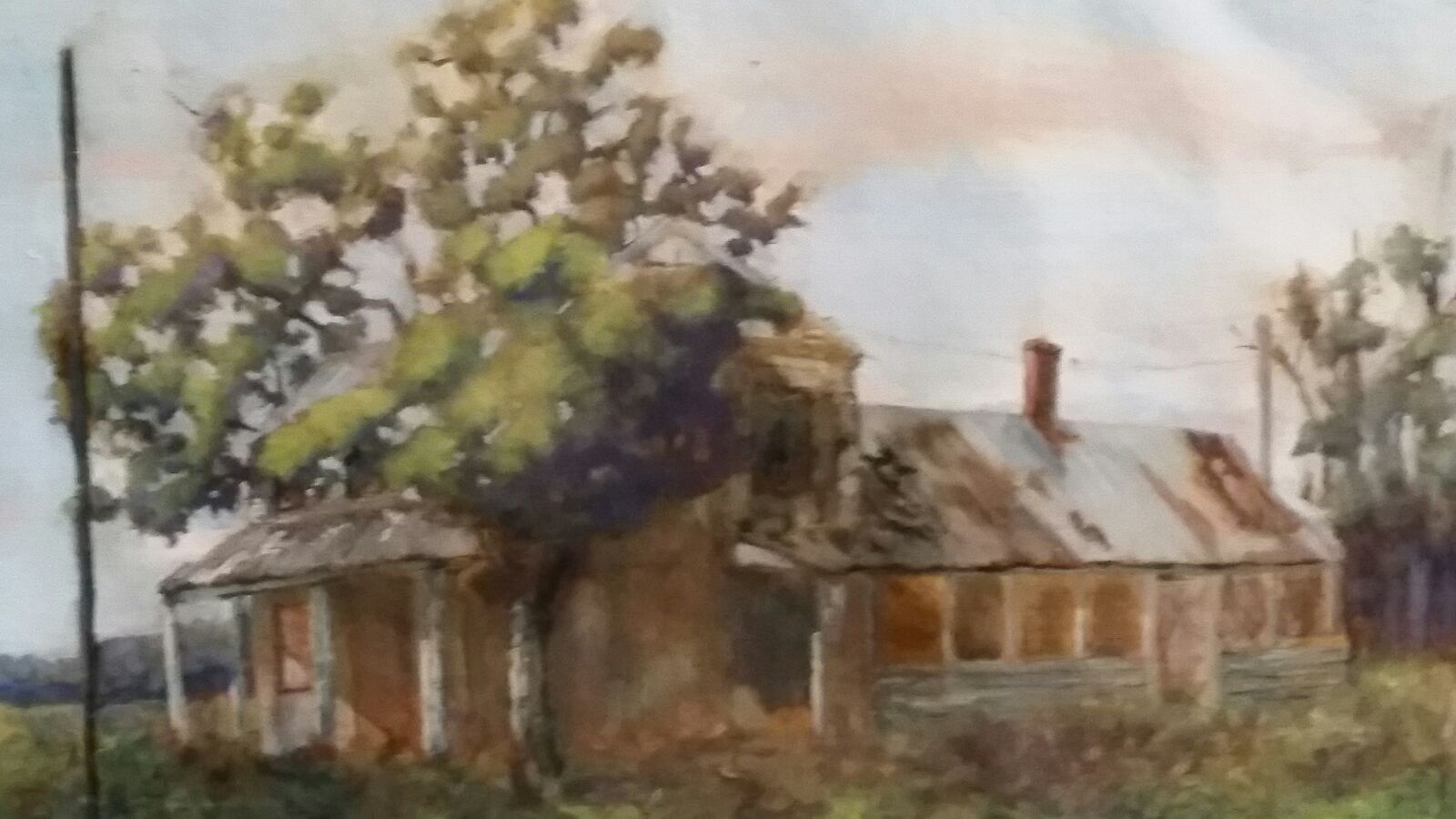
That said, I confess to a certain fondness for “them,” provided they leave things behind.  Children’s building-block edifices are charming; in a more solemn but no less poignant way are the remains of the dead, left where they did the work that sustained them.  Like these houses:

Nineteenth-century farmhouse in norther Chowan County.  Oil on paper.  12 x 16in.

Nineteenth-century farmhouse in northern Chowan County. Oil on paper. 12 x 16in.

Burnt-out house in northern Chowan County.  Oil on paper. 12 x 16in.

Burnt-out house in northern Chowan County. Oil on paper. 12 x 16in.

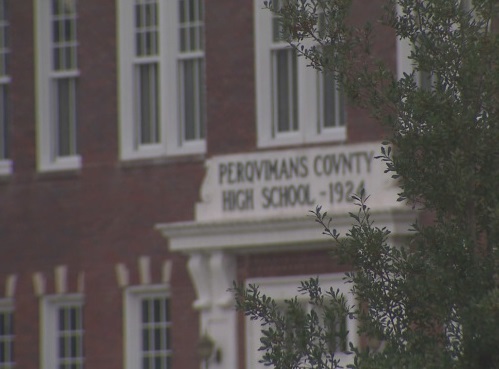
Even the gratuitous hand-work is telling.  Like the “V” for the more usual “U” in the Perquimans County High School facade. Someone made that decision about lettering to give an air of Latinate dignity to poor students in an overlooked part of the world.  It was put there before someone decided to abandon the world of learning and human children and masonry for that of information, human resources, and trailers.
File photo from WAVY10, a Hampton Roads area television station.
File photo from WAVY10, a Hampton Roads area television station.


In Praise of the Land

I’m pleased to hang 18 pictures alongside the works of Christine Enochs and John Mac Kah at Chiesa Restaurant on Montford Avenue in Asheville, NC. Show opens Tuesday the 28th. Thanks to Dana Irwin, who has made us look good. chiesa3 I’m looking forward to seeing the work of my colleagues that doesn’t treat the French Broad River.  All four of us will show work on that theme on October 15 at the second annual Of Time and the River.  

The Coggins Farm Series

Places in-between 2: Coggins Farm

It’s often fun to take more than one medium in the field.

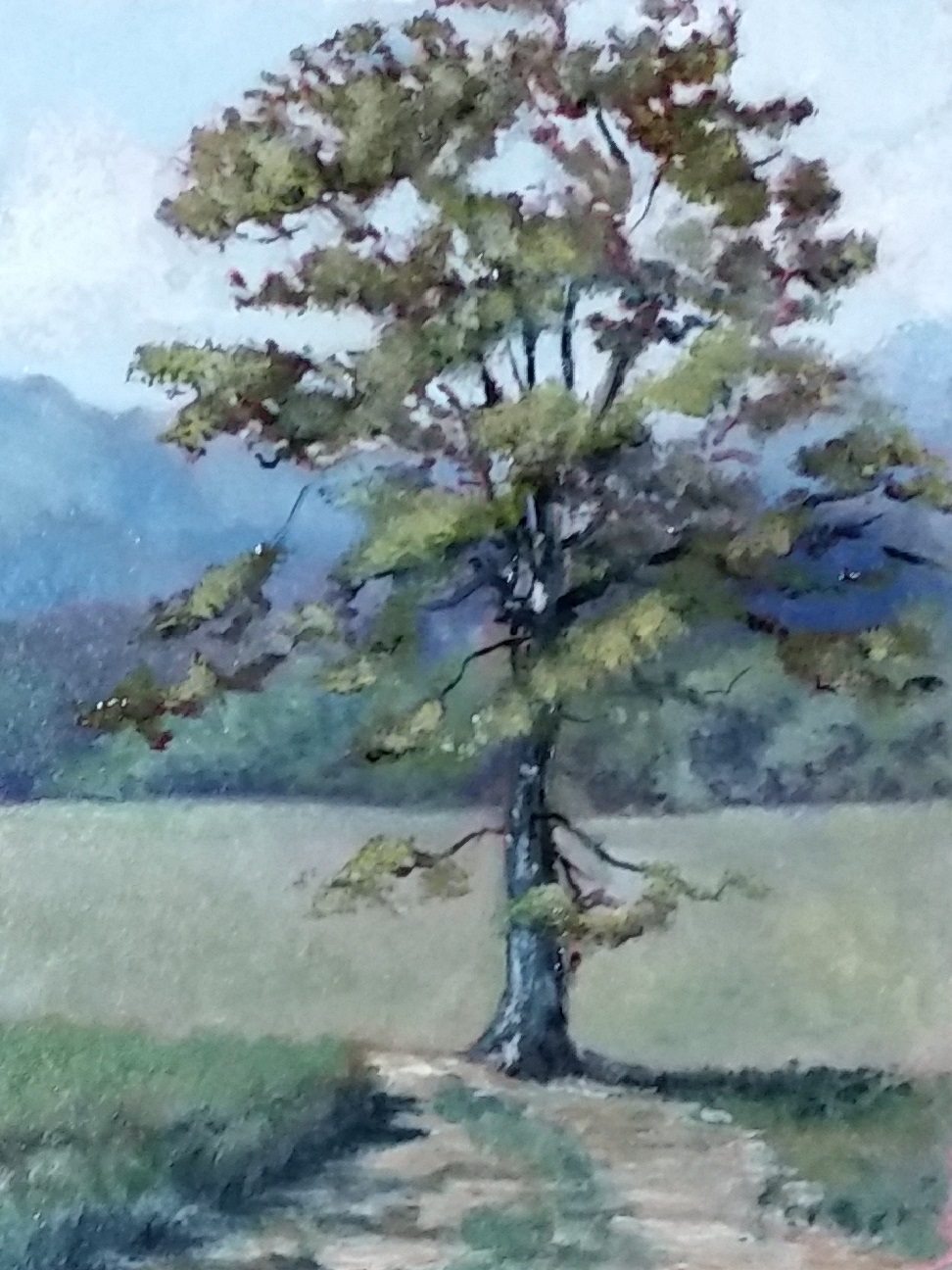
Oak at The Coggins Farm

Oak at The Coggins Farm

Another stint at The Coggins Farm allowed for three more layers of paint to the painting begun in my last post.  Oil on paper is the stuff.

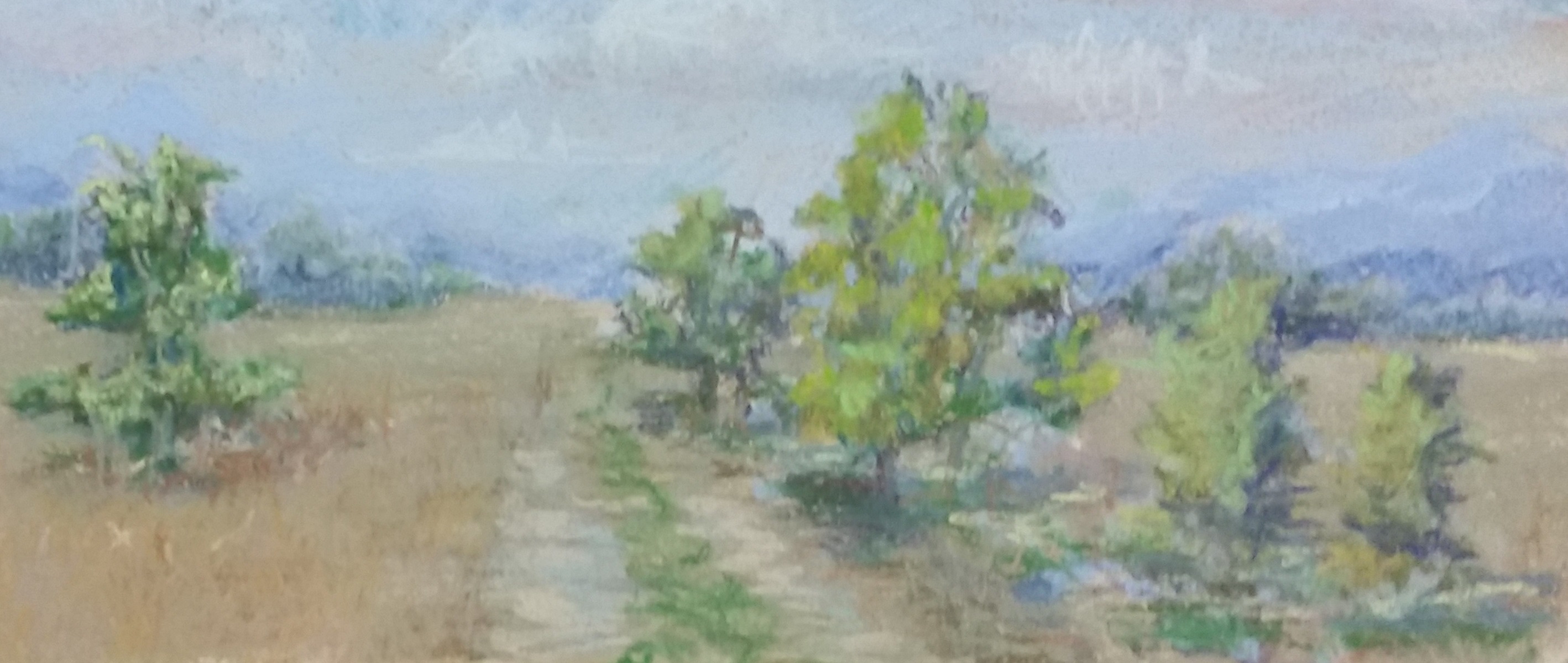
It also allowed for a pastel sketch, below.  For this sketch, I chose a cold-pressed watercolor paper sized it with hide glue to which I added fine rutile clay.  It feels good to build with different media onto a scaffold of a few basic natural materials.  From the Middle Ages to Manet (as good a pastellist as the more famous Degas), most artists could look under the hood of most art and discern an accurate parts list.

Pastel sketch

Pastel sketch

Here’s hoping that pastel, etching, and the other oft-overlooked fine arts get outdoors ahead of bulldozers.  It is often the artist’s function to provide a sustained reflection on fleeting things.

Places in-between 1: The Coggins Farm

When most people think of countryside, they think of wilderness because it offers an escape from suburban sprawl.  Somewhere in the American landscape there remains a wilderness for us if we could but outrun the tacky sameness that our cities disgorge.

There is, though, another countryside, just as rare, and far more overlooked.  It is composed of small-holdings, and it is vanishing.  Before the Wild West, there was the West of Thomas Jefferson’s America, which began at the Eastern Continental Divide.  The farms founded before industry changed the scale of agriculture were incredibly diverse places.  Here is one such:

Pastures and oaks at the Coggins Farm

Pastures and oaks at the Coggins Farm

In practice, each farm was like a little world, producing meat, dairy, plants, and fuel, as well as harboring fish, game, honey, stone and wild fowl.

I was lucky enough to spend the day painting at the Coggins Farm east of Asheville, NC. Not currently productive, the place is currently the center of local controversy over its future.  You can read about it here, on the website of an enterprise to reconnect the land to its original developer’s purpose of long-term provision.

Taking advantage of the view above.

Taking advantage of the view above.

It’s a treat to stand where such a variety of work was once done by hand.

The bottom half on an oil painting.  This is wet oil paint on paper treated with natural gesso, photographed in the shade.

The bottom half on an oil painting. This is wet oil paint on paper treated with natural gesso, photographed in the shade.